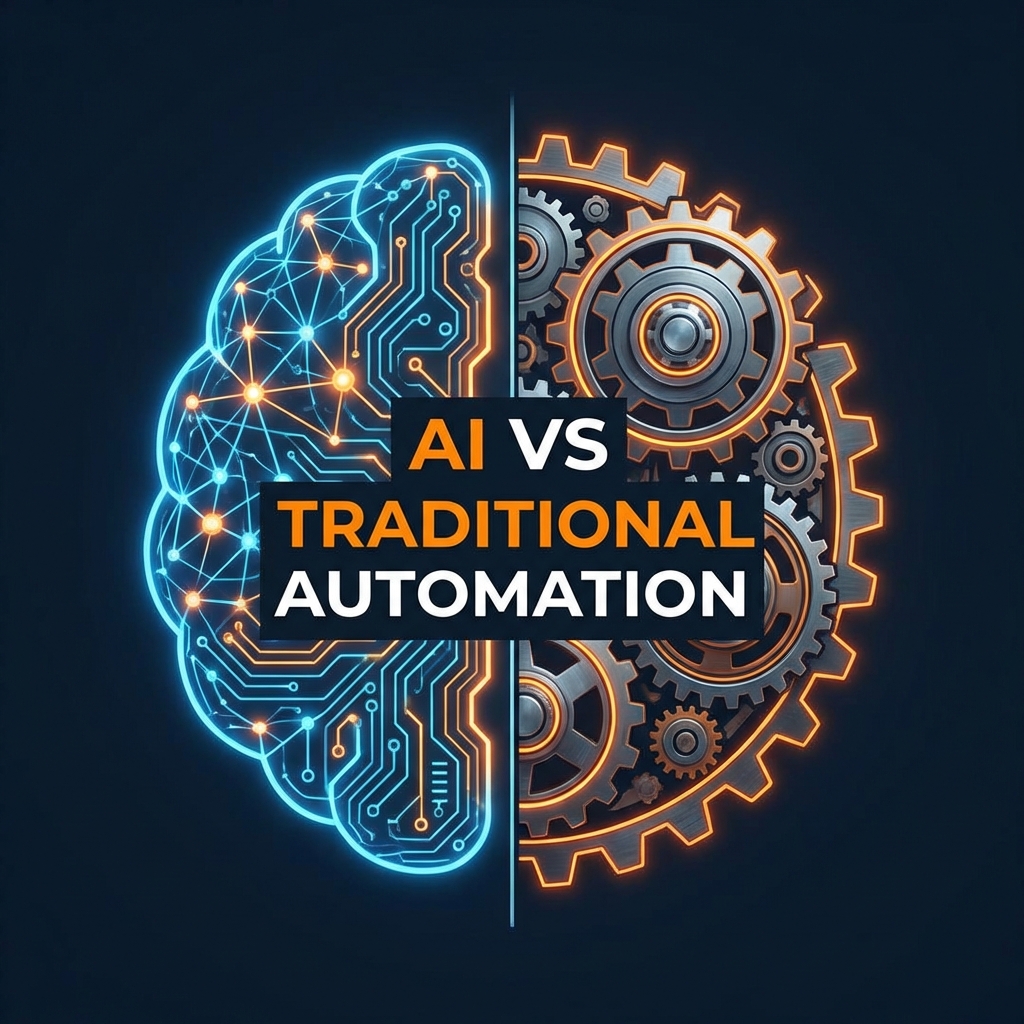
With all the buzz around artificial intelligence, many business owners are confused about what they actually need. Is AI always the answer? When is traditional automation sufficient? Understanding the difference can save you from over-engineering simple problems or under-investing in complex ones.
Traditional Automation: Rule-Based Efficiency
Traditional automation follows predefined rules: "If X happens, do Y." It's excellent for structured, repetitive tasks with clear inputs and outputs. Think of it as a very reliable employee who follows instructions perfectly, every time, without ever needing a break.
Examples include: automated email responses based on keywords, scheduled report generation, data transfer between systems, and invoice processing with standard formats.
AI-Powered Automation: Adaptive Intelligence
AI automation can handle unstructured data, make predictions, and adapt to new situations. It learns from patterns and can make decisions that weren't explicitly programmed. Think of it as an employee who not only follows instructions but can also interpret ambiguous situations and improve over time.
Examples include: customer sentiment analysis, demand forecasting, document classification from varied formats, and natural language understanding for customer inquiries.
Choosing the Right Approach
The best solution depends on your specific challenges. Not every problem needs AI. Implementing AI where simple automation would suffice wastes resources and adds unnecessary complexity. Conversely, trying to force traditional automation on tasks requiring judgment leads to rigid systems that break easily.
Key Questions to Ask
When evaluating your automation needs, consider:
- Are the inputs and outputs clearly defined and consistent?
- Does the task require interpretation or judgment?
- Will the rules change frequently?
- Is there historical data that could inform predictions?
The Hybrid Approach
In reality, most effective automation strategies combine both approaches. Traditional automation handles the predictable workflows, while AI components manage the exceptions and edge cases. This hybrid model delivers efficiency without over-complicating your systems.
Making the Right Choice
Selecting the appropriate automation approach requires understanding both your business processes and the available technologies. The wrong choice can lead to failed projects, wasted budgets, and frustrated teams. The right choice transforms your operations.
Need Help Deciding?
Our team can assess your specific needs and recommend the right automation approach for your business.
Book Free Consultation